🔥 The Dickinson Newport Diesel Heater: How It Saved My RV at –19°F (Real-World Review)
This winter taught me something I’ll never forget: you need a reliable heat source when you’re living or traveling in temperatures that plunge into the negatives. I’ve seen –19°F real temperature (before wind chill) with the wind blowing straight under my vehicle. Every inch of metal becomes a heat sink. Everything inside wants to freeze. And you start to realize—fast—whether your heating system is genuinely dependable.
For me, the thing that saved my winter was the Dickinson Marine Newport bulkhead-mounted diesel heater.
And after living with it day in and day out, through one of the harshest cold spells I’ve ever experienced, I want to share what it’s actually like to use one of these heaters as your primary heat source.
If you’re living full-time in a van, skoolie, ambulance conversion, RV, or off-grid cabin—this post might save you a lot of cold, sleepless nights.
🔥 Why I Switched From a Wood Stove
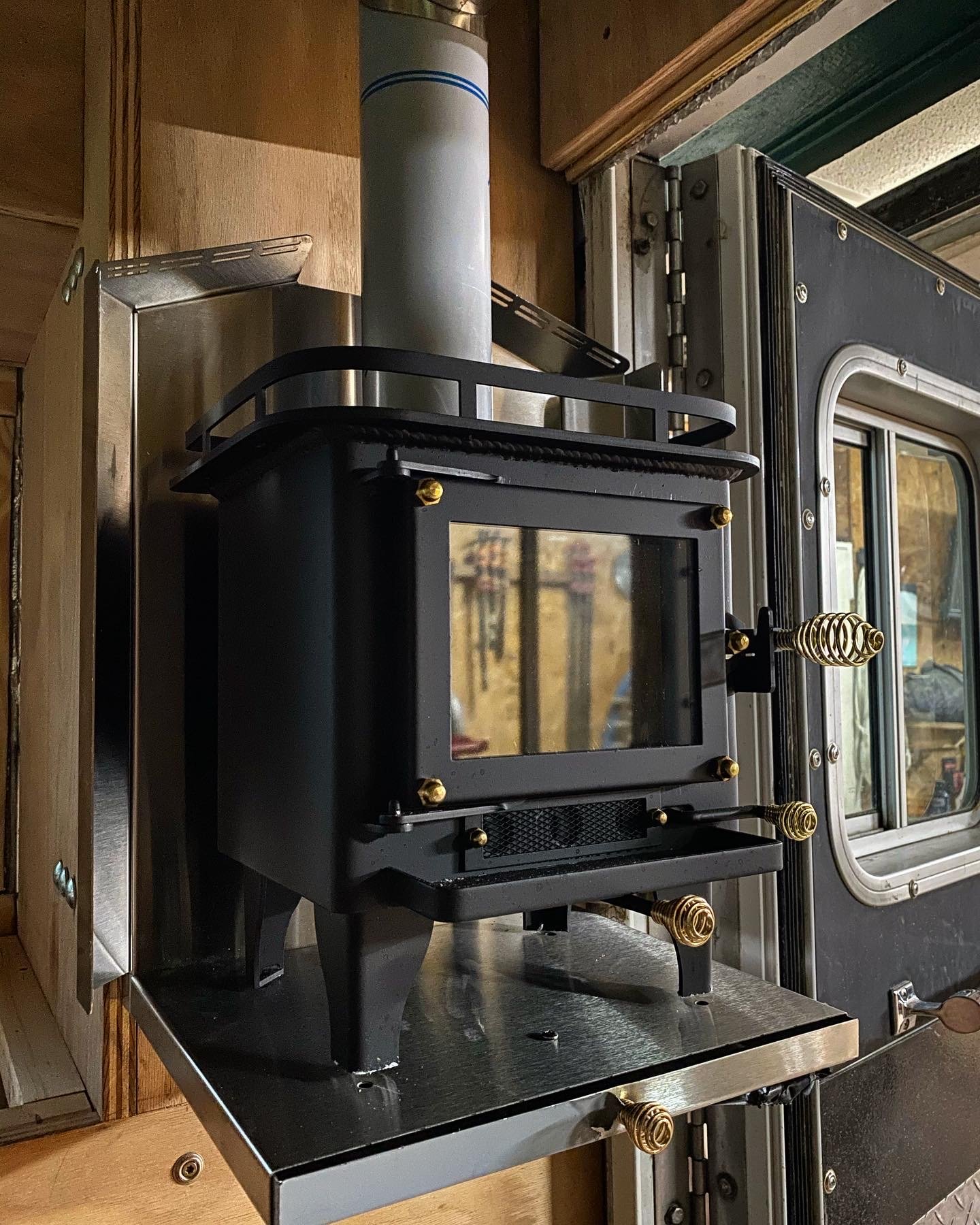
Before the Dickinson, I actually designed my ambulance conversion around a wood stove—specifically the Cubic Mini. I love wood heat. But here’s the brutal truth:
Even with dense hardwood like oak
Even with careful burn control
Even with a perfectly tuned stove
You’re getting maybe 3 hours of heat per load.
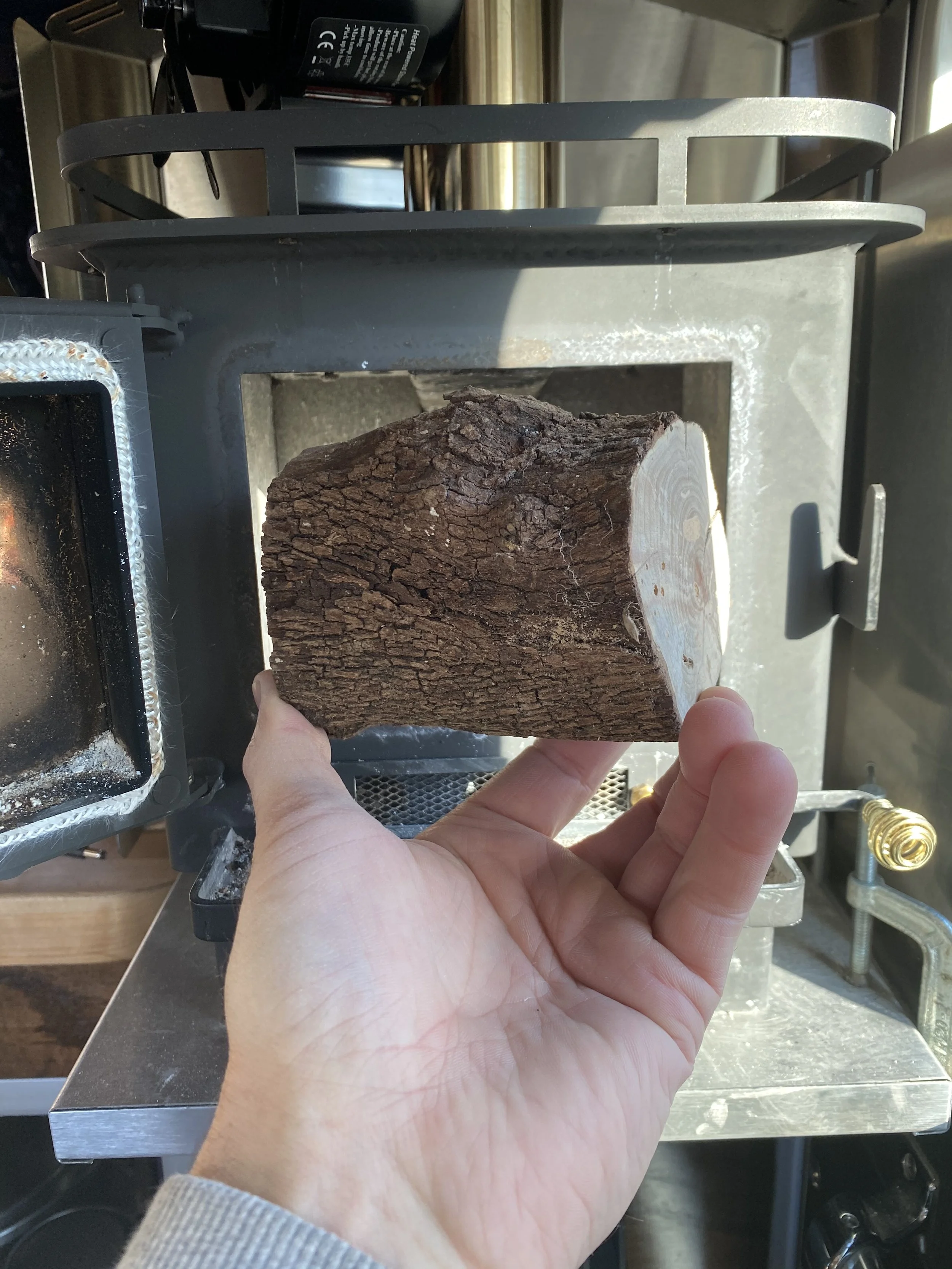
And when it’s –10°F outside, 3 hours is not enough.
You end up waking up all night feeding the fire… or you oversleep by an hour and wake up to a frozen vehicle.
That was the reality that pushed me toward diesel heat.
🔥 Living With a Dickinson Newport Every Day
There’s a big difference between testing a heater and actually living with it through months of winter. So here’s everything I learned.
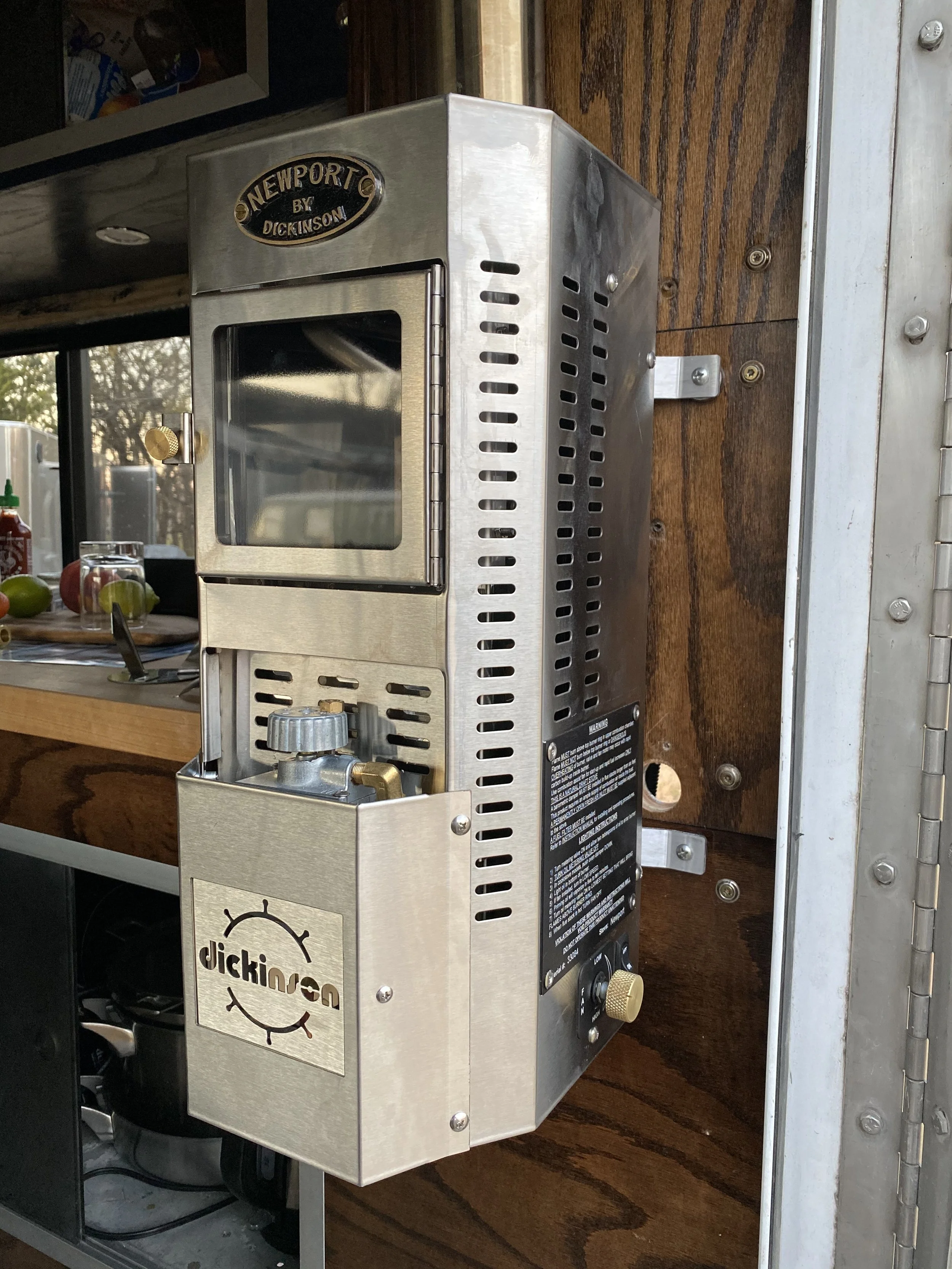
1️⃣ The Heat Is Exceptionally Dry
This is one of the biggest advantages over propane heaters and wood stoves.
No condensation. No mold. No mildew. No wet windows.
Last night, temperatures were around 6–9°F, and even then I had zero condensation forming on the inside of my ambulance. That dry heat makes a massive difference in tight living spaces where your own breath can saturate the air.
2️⃣ Absolutely No Diesel Smell (When Used Correctly)
I was honestly worried about this before owning one.
But the Newport is a sealed combustion heater:
Fresh air is drawn from the outside
Combustion exhaust goes out the chimney
Nothing leaks inside
The only time you’ll smell anything is during ignition, and even then it’s just a tiny puff when you open the door.
Once the door is closed:
No diesel smell. None.
3️⃣ How the Dickinson Actually Works
This heater is old-school in the best way. No electronics required.
Inside is a small cylindrical firebox (“like a paint can”), and fuel trickles in at a controlled rate through a tiny metering hole. A stainless diffuser sits over that hole and radiates heat once it gets hot.
Here’s the ignition process in simple terms:
Turn the fuel on full for about a minute
Turn it off
Light a tissue or paper towel
Drop it inside onto the fuel inlet
The tissue acts like a wick
As the flame heats the firebox, it vaporizes the diesel
The flame rises to the top and becomes a clean “floating” blue flame
Once the flame lifts into that stable zone, you turn the fuel back on and adjust it.
It sounds complicated, but after a week of doing it, it becomes second nature.
4️⃣ The Hidden Danger: Why You Must Light It With a Cold Firebox
I can’t stress this enough:
Never try to relight it when the burn chamber is still hot.
You can get a small “poof” or combustion pop because the diesel will vaporize too quickly. Let the chamber cool completely, and you’re golden.
5️⃣ Fan-Assisted Flue for Deep Winter
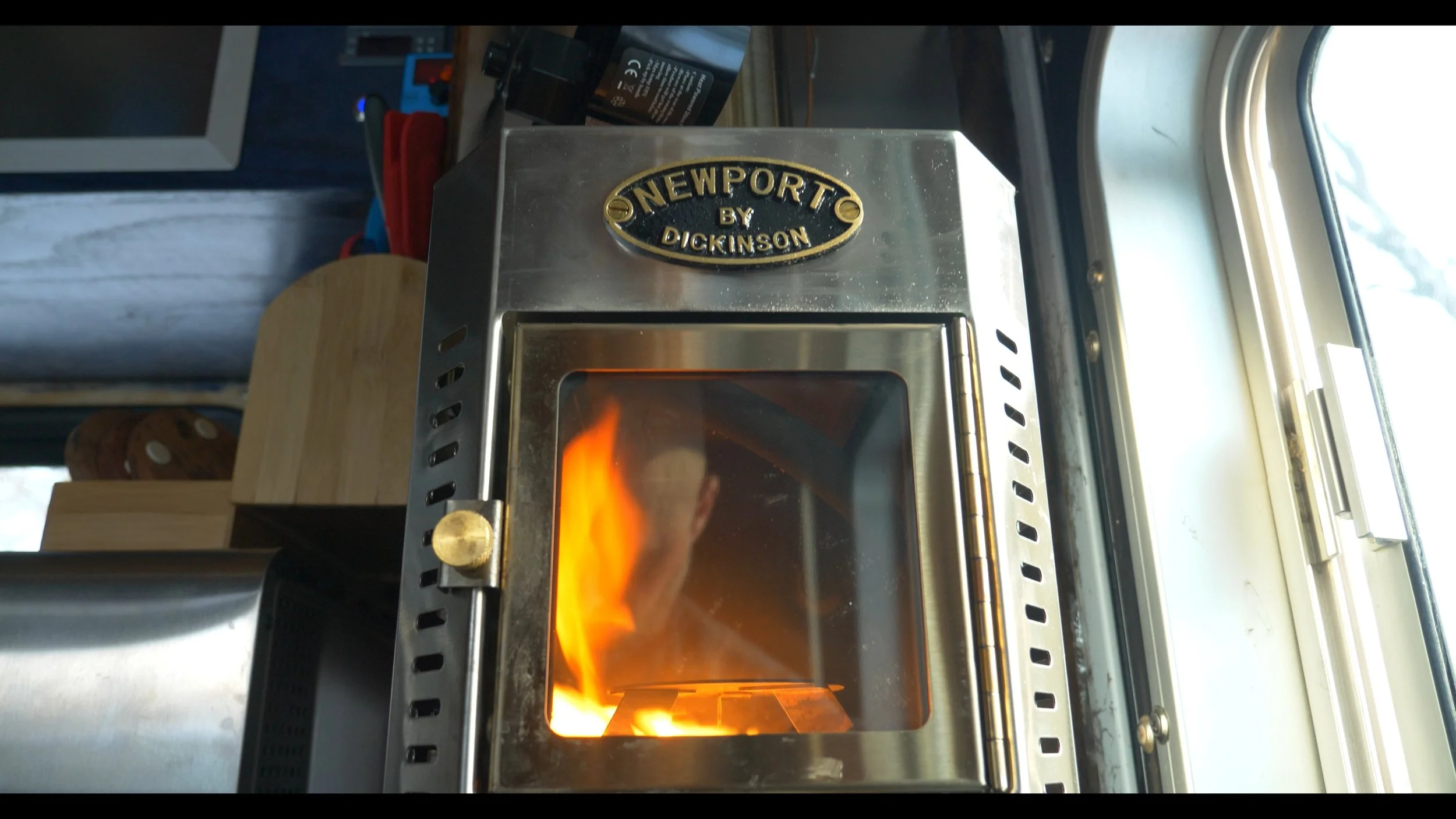
Most days, you don’t need the fan at all.
But when temperatures drop into severe negatives, the optional 12V fan dramatically improves efficiency at higher fuel settings.
You’ll know you need it if:
The flame turns too orange
You get soot buildup on the glass
Turn on the fan, add air, and the flame cleans right up.
6️⃣ The Double-Walled Construction Is a Game-Changer
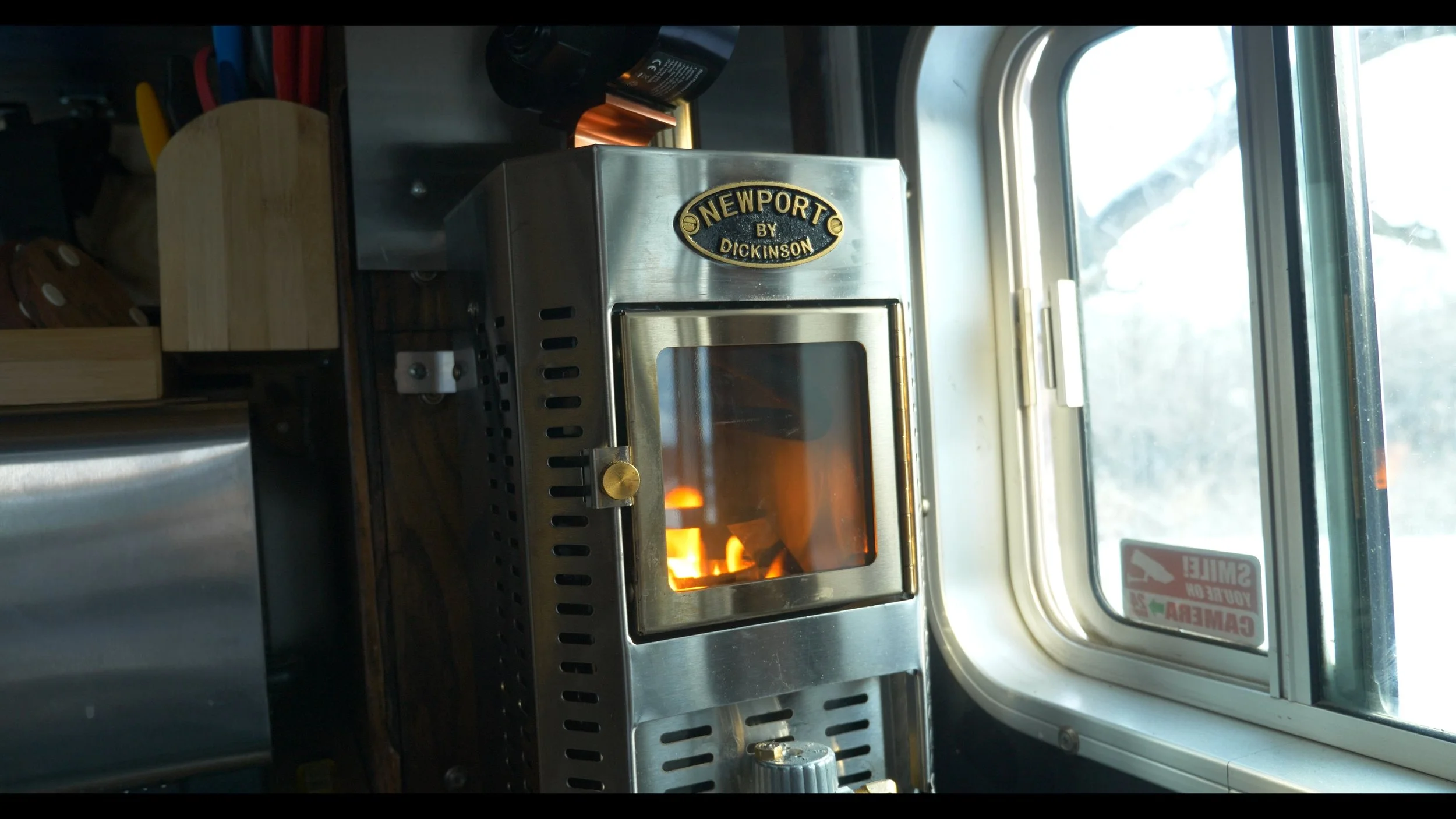
Unlike small wood stoves, the Dickinson’s exterior is double-walled:
The sides stay cool
The back stays cool
The heat rises upward instead of radiating sideways
I mounted mine near an aluminum window—something you cannot do with most stoves—and the window never gets hot.
The design is simply brilliant for tight spaces.
7️⃣ Safety Systems That Actually Matter
For anyone considering one of these:
✔ Carbon monoxide detector (mandatory)
✔ Fire extinguisher (common sense)
✔ Uncapped drain line – this will dump excess fuel safely outside
✔ Barometric draft regulator – keeps the flame stable during high winds
✔ High-temperature cutoff valve – cuts fuel if the system overheats
Dickinson recommends attending the stove while it’s operating.
I’ll be honest: I’ve left mine running while shopping. But I also run a high-temp shutoff. You assess your own risk tolerance.
8️⃣ Fuel Use: Real-World Numbers
On low, mine burns about 1 gallon every 24 hours.
In deep negative temperatures, I burned about 2 gallons per day.
That’s incredibly efficient for the amount of heat this thing puts out.
9️⃣ Gravity Feed vs Pump
The Newport can run 100% without electricity if gravity-fed.
To do this:
Tank needs to be ~1 ft above the stove
No pump required
Absolutely silent
Zero amp draw
I couldn’t get my tank high enough in my build, so I use the Dickinson low-pressure pump. It ticks once every 7 seconds and costs ~$120, but it’s reliable and quiet.
🔟 The Secret Superpower: Hot Water Heating Loop
This alone makes the Dickinson one of the smartest upgrades I’ve ever made.
Inside the stove is a stainless steel coil that can be connected to:
A water tank
A radiant floor loop
A thermosiphon hot water system
Mine is plumbed to a 6-gallon aluminum tank filled with RV antifreeze, which then passes through radiant floor tubing.
This does not replace your primary heating system.
But it does:
Keep your floor from freezing
Keep water from icing
Make the floor noticeably warmer (comfortably warm, not hot)
In an RV or skoolie, that’s huge.
🔥 So Is the Dickinson Newport Worth It?
In my opinion: absolutely—yes.
Here’s why:
It runs with no electricity if gravity-fed
Produces extremely dry, clean heat
Burns diesel cleanly with a beautiful flame
Works better the colder it gets
Can heat hot water and radiant floors
Has almost nothing to break
Feels like having a tiny fireplace in your home
It’s not cheap.
With the heater, pump, chimney parts, water loop, and safety accessories, you’re looking at $750–$1,000+.
But you buy it once.
It’s a lifetime heater.
And honestly, in –19°F weather, knowing I have a heat source that doesn’t depend on electronics, solar, batteries, or any fragile systems… that’s peace of mind that’s worth every penny.
🔥 Final Thoughts
If you’re living off-grid, full-time on the road, or in any mobile setup where freezing temperatures are a real threat, the Dickinson Newport diesel heater is one of the most reliable pieces of equipment you can install.
It kept me alive in temperatures that would freeze an RV solid.
It uses barely any fuel.
It requires almost no maintenance.
And it turns your space into a warm, cozy cabin.
If you have questions, drop a comment below the video or shoot me a message.
I’ll include links to the heater, accessories, and my setup details so you can dig deeper.
Stay safe. Stay warm.
And thanks for being here with me.